
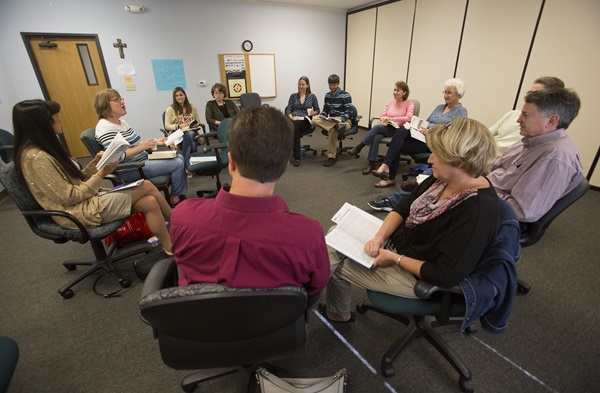
One of the many ways Christians grow in faith together is through Sunday school. While Sunday school is often associated with children and youth, it is equally vital for adults. Adult classes create space for deeper spiritual formation, meaningful conversation, and the kind of Christian community that sustains discipleship over time.
For congregations seeking to build or strengthen an adult Sunday school ministry, the following practices can help.
Develop classes strategically
Organizing children’s classes is relatively straightforward, often based on age. Adult ministry requires a more intentional approach. Adults choose whether to participate, and they will disengage if a class does not meet their spiritual or relational needs.
Be prepared for some trial and error when launching new classes. Start by listening. Pay attention to existing relationships within the congregation and use those natural connections as a foundation. Identify and encourage lay leaders who are already gathering people informally.
While age or life-stage can be helpful, many thriving classes form around shared interests, experiences, or spiritual goals. Flexibility and responsiveness are key.
Structure class time with purpose
A welcoming, relaxed environment matters, but Sunday school is more than a time to socialize. Structure helps participants stay focused and engaged.
Allow a few minutes at the beginning for conversation and connection. Give everyone a chance to get their coffee and chat among themselves for a few minutes. Once the group has gathered, clearly transition into the lesson. Opening with prayer centers the group and invites the presence of the Holy Spirit. Provide time for prayer requests and brief class business, such as planning upcoming studies or activities.
Close with prayer to send participants into worship and the week ahead grounded in faith.
Make the class engaging
Adults bring experience, insight, and questions to the table. Effective classes invite participation rather than relying on lecture alone.
Encourage members to prepare in advance for Bible or book studies, then create space for discussion. Ask thoughtful questions, invite differing perspectives, and consider breaking into smaller groups or pairs to deepen engagement.
Incorporating a variety of learning tools — such as images, music, or short videos — can enrich the experience and speak to different learning styles.
Cultivate shared leadership
Strong leadership is essential, but it should never rest on one person alone. Classes that depend too heavily on a single leader risk burnout and long-term instability.
From the beginning, encourage shared responsibility. Rotate leadership roles weekly or assign facilitators on a monthly basis. Plan schedules in advance and ensure backups are in place when someone is unavailable.
Resist the tendency to rely solely on those with formal theological or pastoral training. Leading a class is an opportunity for growth and reflects the Wesleyan commitment to lay leadership and mutual accountability.
Build community beyond Sunday morning
An hour each week is rarely enough to form the kind of deep relationships that sustain a class. Encourage members to spend time together outside of Sunday school.
Simple gatherings — shared meals, game nights or outings — can strengthen bonds. Serving together is equally important. Participating as a group in church ministries or community outreach helps connect learning with lived discipleship.
Welcome new members
Helping newcomers find a class quickly is one of the most effective ways to foster belonging. Pastors and lay leaders can play an important role by getting to know new attendees and connecting them with an appropriate group.
When someone visits a class, offer a warm introduction and an opportunity — but not pressure — to share about themselves. Invitations to lunch or other gatherings can help deepen that initial connection.
At the same time, recognize that not every class will be the right fit. Communicate clearly that visitors are free to explore and find the group where they feel most at home.
Conclusion
Adult Sunday school remains a powerful tool for discipleship in the local church. With intentional planning, shared leadership, and a commitment to community, these classes can become spaces where faith is nurtured, relationships are formed, and lives are transformed.
This content was produced by ResourceUMC on July 9, 2026. Philip J. Brooks is a writer and content developer at United Methodist Communications. Contact him by email.